Monday, July 22, 2019

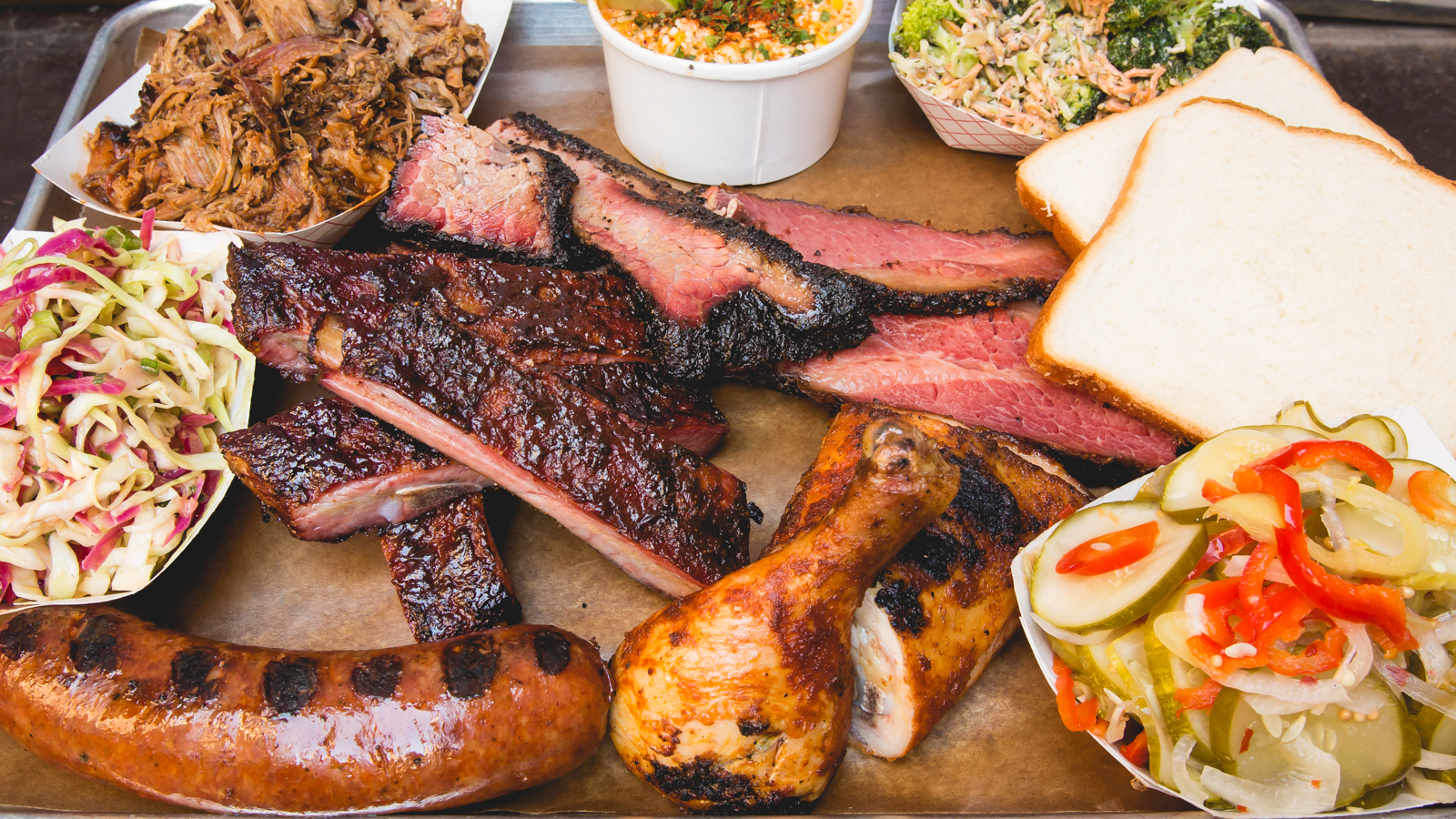
On Meats and Drinks. What Should a Christian Eat or Drink?


Related image

Meats and Drink? What Should A Christian Eat or Drink?

The New Testament makes no rigid rule concerning what the Christian shall eat or drink—with the exception of strong drink, as we saw in the last post. We are instructed not to judge one another in this matter (See Romans 14:2, 3, 17; 1 Corinthians 8:8; and 1 Timothy 4:1-5).

After God, through Moses, gave the law to Israel, clean and unclean meats were defined as a part of the ceremonial law, known as Kosher Laws (See Leviticus, chapter 11). Commentators in general treat this requirement figuratively, particularly pertaining to separation and holiness. It was part of their schoolmaster training to bring them unto Christ for justification by faith (Gal. 3:19-29). Christ has completely fulfilled that law. Those who rejected Him continued practicing the ceremonial law. Even some who became believers had scruples concerning meats. Paul wrote of them as being “weak in the faith” (Rom. 14:1, 2, 21; 15:1). Having been so long under the law, it was difficult for them to grasp the marvelous truth of the grace of God in Christ. Paul dealt with them gently, instructing the “strong” to bear the infirmities of the weak rather than please themselves.
As for Gentile believers, the only restriction was to “abstain from meats offered to idols, and from blood...” (Acts 15:29). Since this is New Testament doctrine, it is still effective today.

 “For the kingdom of God is not meat and drink; but righteousness, and peace, and joy in the Holy Ghost” (Rom.14:17)

I Timothy 4:1-5
1.     Now the Spirit speaketh expressly, that in the latter times some shall depart from the faith, giving heed to seducing spirits, and doctrines of devils;
2.     Speaking lies in hypocrisy; having their conscience seared with a hot iron;
3.     Forbidding to marry, and commanding to abstain from meats, which God hath created to be received with thanksgiving of them which believe and know the truth.
4.     For every creature of God is good, and nothing to be refused, if it be received with thanksgiving:
5.      For it is sanctified by the word of God and prayer.
I. LAW AND LIBERTY (1 Tim. 4:1-5)
A. False Teaching Predicted: The overall context of Paul’s words to Timothy pertains to false teaching in the light of New Testament doctrine. Abstinence from meats is a false teaching under grace. There are those, even in our day, who teach as Paul said they would. Usually they forbid not all meats, but certain kinds (principally pork, shellfish e.g. shrimp, lobster); but some are strictly vegetarians. This is their privilege if they do not make it Bible doctrine (or think they get extra credit by observing it).

Paul says the Holy Ghost had spoken against the practices he enumerates, which amounts to a departure from the faith by obeying the seducing spirits and believing doctrines of devils. Those “spirits” will speak lies as though they are the truth- “in hypocrisy, “ their conscience having become so seared (feelingless) that they can lie with impunity. They will presume to have authority, as the words “forbidding” and “commanding” indicate.

B. Imposing Law on Grace: It must be understood that those who impose these “laws,” and those who deliberately depart from the faith and believe the hypocritical lies, are not the same as “the weak” who have not matured in the faith to where they can understand and enjoy the liberty of grace. The “seducing spirits” actually deny the grace of God by contending for the continuance of the requirements of the law.

When Paul comes to “commanding to abstain from meats,” he elaborates somewhat. He says that “every creature” is good for food, and God created them to be received thankfully by all who believe and know the truth according to grace. None are to be refused if so received, for all are “clean” by being “sanctified by the word of God and prayer.” The one exception is abstention from meats offered to idols; actually from eating with the knowledge that they are being offered as a sacrifice to idol gods.

C. Eating With and Without Knowledge: The exposition in 1 Corinthians 8 seems to indicate that nothing is wrong with the meat itself, which, apart from the idolatrous ceremony, might be eaten. However, it would be wrong to partake of it on the ground that a “weak brother” might eat of it through lack of knowledge, and bring condemnation on himself to his destruction.

For instance, one may eat with the understanding that “an idol is nothing in the world” (1 Cor. 8:4); a weak brother may not have this knowledge that an idol is “nothing” but a fantasy of the imagination. Because he sees his fellow-Christian eating this meat, he may be “emboldened to eat those things” as being offered to an idol, or a god that exists. Even though he has a measure of doubt, he may eat simply because his “strong” brother eats. Paul says, “And he that doubteth is damned if he eat, because he eateth not of faith: for whatsoever is not of faith is sin” (Rom. 14:23).

Roman 14:1-3
1. Him that is weak in the faith receive ye, but not to doubtful disputations.
2.  For one believeth that he may eat all things: another, who is weak, eateth herbs.
3. Let not him that eateth despise him that eateth not; and let not him which eateth not judge him that eateth: for God hath received him.
1Corinthians 8:8-9
8. But meat commendeth us not to God: for neither, if we eat, are we the better; neither, if we eat not, are we the worse.
9. But take heed lest by any means this liberty of yours become a stumblingblock to them that are weak.
II. JUST AND UNJUST JUDGMENT (Rom. 14:1-3; 1 Cor. 8:8,9)
A. Just Judgment: “Judgment” in this respect has more to do with the responsibility of the individual Christian to exercise sound judgment between right and wrong; between truth and error. In this sense, it is more related to discernment, or to understanding what obscure Scripture passages mean when rightly divided. It is evident that such discernment would be helpful with relation to meats and drinks. However, the Church also must exercise just and sound judgment in its stand for truth. Sometimes the best judgment is a minimum of judgment. Paul seems to advise this in Romans 14. But it is of the greatest importance that all judgment be in line with and subject to the unchanging and infallible Word of God.

B. Unjust Judgment: This is imposing personal judgment where Scripture has not spoken, or where such judgment is forbidden. Romans 14:13 is an example: “Let us not therefore judge one another anymore: but judge this rather, that no man put a stumbling block or an occasion to fall in his brother’s way.” Colossians 2:16, 17 speaks to the matter under discussion here: “Let no man therefore judge you in meat, or in drink, or in respect to an holyday, or of the new moon, or of the sabbath days: Which are a shadow of things to come; but the body [true substance] is of Christ.” We are not to let philosophers and deceivers (v. 8) impose unscriptural judgments against us, nor to submit to such unjust judgments. Since meat does not commend us to God, or said another way does not make us acceptable unto Him, eating does not make us any better, and abstaining does not make us any worse- then, unjust judgments are due no attention.

C. Abuse of Liberty: Christian liberty or freedom can be misunderstood or misinterpreted and therefore, abused. True “Christian liberty” or “freedom” is not liberty to do as one pleases, but freedom to obey God’s Word. Sin is bondage; the bondman obeys his master-Satan. But there is victory in Jesus, who said, “If the Son therefore shall make you free, ye shall be free indeed” (John 8:36). Paul says, “Being then made free from sin, ye became the servants of righteousness.. .For when ye were the servants of sin, ye were free from righteousness” (Rom. 6:18, 20).

The believer who begins to clamor for “freedom of conscience” possibly already has a conscience that has “run wild” and has become “seared with a hot iron.” He insists on being trusted, but proves himself untrustworthy. Then he resents just judgment! Paul told the Galatians, who were about to become “entangled again with the yoke of bondage,” and some of whom were ‘fallen from grace” (Gal. 5:1, 4), “...Ye have been called unto liberty; only use not that liberty for an occasion to the flesh [an excuse to fulfill fleshly lusts]...” (Gal. 5:13).

It is possible to take unwarranted liberties in judging one another. If one is doing wrong and another calls attention to the fact, it is not judging, for the Word of God has already judged him, or condemned him. (See John 3:18-21.) It is rather a loving effort to “restore” one who has been “overtaken in a fault” (Gal. 6:1). However, if one judges another only on the basis of personal opinion or convictions, he is judging unjustly and abusing his liberty. Summarily, all concerned are admonished not to be offensive in passing judgment where the Bible has already spoken. “For meat destroy not the work of God [the character of a brother]. All things indeed are pure; but it is evil for that man who eateth with offence” (Rom. 14:20).

III. DRINKS
A. Strong Drinks Forbidden: This was dealt with in a prior post. (Review if necessary.) The Biblical stand of holiness is unequivocally against all liquor or strong drink.

B. Harmless Drinks: Little is said in Scripture about this type of drink; therefore, this seems to be an area where personal conscience is legitimate. Some individuals feel that certain beverages should be avoided, such as coffee, tea, and soft drinks. As with meats, personal judgment of others is discouraged. It is reasonable, of course, to avoid any drink that the body seems to reject. This varies with individuals. For instance, the caffeine in coffee and tea may cause sleeplessness for some; or it may appear to be habit-forming to the point where there is irritability without it. If a drink seems to be injurious to the body-the temple of God-it would be wisdom to dispense with it, or at least to use the necessary moderation in its use.

If you have never accepted or if you have fallen away from Jesus Christ here are three steps you need to take to be saved:

Image result for abc's of salvation

You must admit you are a sinner, confess your sin to Jesus, repent (turn from all you know is wrong), ask Jesus to come in your heart, and begin to follow Jesus by reading and obeying his word and go to a bible believing church that teaches his word. And tell someone what Christ Jesus Has Done For You (Rev 12:10)  
May God through Christ bless you!

If you enjoyed this blogpost and believe some else can be helped and may be blessed pass it along:

If you have a prayer request or have questions that need clarification please contact me at: neverstoppraying8@gmail.com


Should a Christian Use Alcohol, Drugs, Or Tobacco?

Image result for alcohol and drugs tobacco


SHOULD A CHRISTIAN USE ALCOHOL OR DRUGS OR SHOULD HE PRACTICE TOTAL ABSTINENCE FROM ALL LIQUOR OR STRONG DRINK, AND BE AGAINST THE USE OF TOBACCO IN ANY FORM, OR USE OF DRUGS LIKE MORPHINE, OPIUM, OR MARIJUANA TO NAME A FEW?  

As I grew up as a young man I never saw a commercial on television, or a magazine advertisement that showed the consequences of drinking beer or hard liquor, or smoking cigarettes. The advertisements in both venues were of nice-looking men and women enjoying life and practicing one of these vices (smoking or drinking). As one preacher said, “Satan will never show you the cemetery ‘that house’ is built on, or the septic tank below it!” The countless families that have been ravaged by alcoholism and drugs, only God can count! Satan never tells folks what will happen to their lungs, bodies, livers, brains, and the disease these sins breed. The many deaths of drinking and driving, the marriages wrecked through alcohol and drug use, the terrible deaths of smokers who die of cancers in their lungs or COPD that occurs from prolonged use. I have personally seen family members die of cancer as a result of smoking, and knew an alcoholic who was so addicted he drank mouthwash to stay drunk at work because he was so addicted to drink. He died at the age of 51 and according to the nurses his liver gave out and he bled from every pour in his body. The nurses told the family, “it was the worst thing they had ever seen in the emergency room.” The devil will not show these scenes to you if at all possible, until it is too late!

 (1) Total Abstinence from All Liquor or Strong Drinks... .The Bible expressly forbids the use of intoxicating beverages. Even slight indulgence is not in keeping with the Scriptural standard of holiness (Read Proverbs 20:1; 23:29-32; Isaiah 28:7; 1 Corinthians 5:11; 6:10; and Galatians 5:21). To be sound the Law forbids the priests from drinking while doing their service in the tabernacle and in the temple. In Leviticus 10:8-10 is says, "And the LORD spake unto Aaron, saying, (9) Do not drink wine nor strong drink, thou, nor thy sons with thee, when ye go into the tabernacle of the congregation, lest ye die: it shall be a statute for ever throughout your generations: (10) And that ye may put difference between holy and unholy, and between unclean and clean; Moreover, the Bible teaches us that in the New Testament we are priests unto God (Rev 1:5-6), and that we are also the temple of God (1 Cor. 3:16-17).

(2) Against the Use of Tobacco in Any Form, or Drugs like Morphine, Opium, Marijuana, etc...The use of tobacco and the habitual use of narcotics are sinful practices that defile the body, the temple of the Holy Ghost, and is an outward evidence of an impure heart. (See Isaiah 55:2: 1 Corinthians 10:31, 32: 2 Corinthians 7:1; Ephesians 5:3-8; and James 1:21). Smoking is unclean and ravages the cells in the lungs, moreover nicotine is considered one of the most addictive substances (even more than heroin) known to mankind.

There is no place in the life of a born-again, sanctified, Holy Ghost-filled Christian for anything unclean, or that is injurious to the body, which is “the temple of God” (1 Cor. 3:16, 17)- “The temple of the Holy Ghost” (1 Cor. 6:19). In fact, there is no place in the newly born-again child of God for these things, since the moment he is “in Christ” he becomes “a new creature.” “Old things”—habits, practices, lusts, desires—belong to the “old man,” the unsanctified man. The desire to sin passes away when we are “in Christ” (See 2 Corinthians 5:17).

The “old things” may need to be called to attention, but when this is done, the “new creature” will joyfully respond to the enlightenment or the grace of sanctification. If Satan tempts, as he often does, a genuine experience of biblical sanctification will instantaneously lay the matter to rest. In fact, the truly justified heart should lose its desire for sin, the sanctifying blood will assuredly crucify any lingering temptation and give the power over it. With the “old man” dead, there need be no answer from the heart of the “new man” to the enticements of the devil (See Roman 6:6, 7; Ephesians 4:22-24; and Colossians 3:9, 10).

In the face of the infallible truth of Scripture, the profession of the new birth and sanctification that does not bear the evidences is a deception. When the works of grace are genuine, they will bear the fruit. If not, there has been something wrong, either with the presentation of the truth, or in the hearer’s understanding of it. When biblical evidences are absent, the misled soul should be enlightened and encouraged to seek God for the inward work that satisfies. True “brotherly love” will not allow one to continue on in a fruitless profession. The verse in Romans below is the way it should be, and it will be when the works of grace have been done in the heart and a complete surrender of man’s will to God has been accomplished by the child of God.

 “But now being made free from sin, and become servants to God, ye have your fruit unto holiness, and the end everlasting life” (Rom. 6:22).

Pro. 20:1 Wine is a mocker, strong drink is raging: and whosoever is deceived thereby is not wise.
Isa 28:7 But they also have erred through wine, and through strong drink are out of the way; the priest and the prophet have erred through strong drink, they are swallowed up of wine, they are out of the way through strong drink; they err in vision, they stumble in judgment.
8. For all tables are full of vomit and filthiness, so that there is no place clean.
1 Cor. 6:9 Know ye not that the unrighteous shall not inherit the kingdom of God? Be not deceived: neither fornicators, nor idolaters, nor adulterers, nor effeminate, nor abusers of themselves with mankind,
10. Nor thieves, nor covetous, nor drunkards, nor revilers, nor extortioners, shall inherit the kingdom of God.
Gal 5:19 Now the works of the flesh are manifest, which are these; Adultery, fornication, uncleanness, lasciviousness,
Gal 5:21 Envyings, murders, drunkenness, revellings, and such like: of the which I tell you before, as I have also told you in time past, that they which do such things shall not inherit the kingdom of God.
Luke 21:34 And take heed to yourselves, lest at any time your hearts be overcharged with surfeiting, and drunkenness, and cares of this life, and so that day come upon you unawares.
Prov. 23:29-35
29. Who hath woe? who hath sorrow? who hath contentions? who hath babbling? who hath wounds without cause? who hath redness of eyes?
30. They that tarry long at the wine; they that go to seek mixed wine.
31. Look not thou upon the wine when it is red, when it giveth his colour in the cup, when it moveth itself aright.
32. At the last it biteth like a serpent, and stingeth like an adder.
33. Thine eyes shall behold strange women, and thine heart shall utter perverse things.
34. Yea, thou shalt be as he that lieth down in the midst of the sea, or as he that lieth upon the top of a mast.
35. They have stricken me, shalt thou say, and I was not sick; they have beaten me, and I felt it not: when shall I awake? I will seek it yet again.
Isa. 52:11 Depart ye, depart ye, go ye out from thence, touch no unclean thing; go ye out of the midst of her; be ye clean, that bear the vessels of the LORD.

I. CONCERNING LIQUOR OR STRONG DRINKS
(Prov. 20:1; Isa. 28:7,8; 1 Cor 6:9, 10; Gal. 5:19,21; Luke 21:34; Prov. 23:29-35; Isa. 52:11)
A. Danger to Soul and Body: Wine as a “mocker” signals danger! One definition of “mock” is: “To lead on and disappoint; deceive.” A mocker is a scorner or one who disdainfully brings disgrace. Wine is thus personified as a scorner and deceiver. None like to be mocked or made fun of by others, yet the Bible uses this to show how alcohol is a mocker. Of course, the soul’s welfare is of first importance, but since we are not our own, but have been bought with a price—the blood of Christ (1 Cor. 6:19, 20)—we are not free to abuse and defile the body, the temple, which is no longer ours.

Isaiah’s prophecy describes the disgusting and repulsive result of drunkenness. Scientific research has proven that alcohol is “a killer.” The BIBLE has known this from the beginning and has stood against its use. Scripture clearly warns that drunkards “shall not inherit the kingdom of God.” They are not saved. The “works of the flesh” have no place in His kingdom.

The evils of alcoholism are far-reaching. They affect society as a whole. There are the physical, moral, and psychological abuses, resulting in broken homes, families going hungry and improperly clothed and sheltered. There is also destruction of property from the near-insanity and loss of control by the user. Despite all legislative efforts to curb drunken driving, crippling and deaths from highway accidents continue to rise. Even murders are committed while otherwise civil individuals are “under the influence.”

B. Total Abstinence: It is argued that the Bible teaches temperance, or moderation.” When the Scriptures are rightly divided, this is very true. However, one does not sin temperately, or with moderation. The so-called “social drink” too often ends in drunkenness and alcoholism. It is no more permissible to “drink a little” than it would be to steal a little, curse a little, murder a little, or worship other gods a little! If self-control is the answer, the place to begin is in resisting the first temptation. No individual can be assured that the first drink will, not result in an uncontrollable thirst! The Bible warns that alcohol is like a cobra or adder, very dangerous venomous snakes. To the vast majority who encounter these types of reptiles, most would stay clear due to the danger they pose to a victim if they were bitten. People who play with these types of snakes are playing with death (Prov. 23:32).

Temperance might well be limited to things allowable, but which can produce harmful effects by over-indulgence. For example, Solomon said, “Hast thou found honey? eat so much as is sufficient for thee, lest thou be filled therewith, and vomit it” (Prov. 25:16). Honey is a food. Alcohol is (Webster): “A colorless, volatile, pungent, liquid...[that] can be burnt as fuel; is used in industry and medicine, and is the intoxicating ingredient in whiskey, gin, rum, and other fermented and distilled liquors.” If it is to be “burnt as fuel,” let it be done “in industry” rather than in the human body!

To illustrate further on the evils of alcohol consider Noah after the flood when he became drunken in his vineyard. He was made naked and as a result his son sinned and caused Canaan to be cursed. Had Noah not taken the first sip, there would have been no sins to occur, and curses to follow (Gen 9: 20-25). Moreover, consider Lot who was made drunk by his two virgin daughters after the judgment of Sodom and Gomorrah. We are shown a drunken man who engaged in two horrific acts of incest with his children because of alcohol and his decedents became the enemies of Israel (Gen 19:30-38).

2 Cor 7:1 Having therefore these promises, dearly beloved, let us cleanse ourselves from all filthiness of the flesh and spirit, perfecting holiness in the fear of God.
1 Cor 3:16 Know ye not that ye are the temple of God, and that the Spirit of God dwelleth in you?
1 Cor. 3:17 If any man defile the temple of God, him shall God destroy; for the temple of God is holy, which temple ye are.
Gal 5:19 Now the works of the flesh are manifest, which are these; Adultery, fornication, uncleanness, lasciviousness,
Gal 5:21 Envyings, murders, drunkenness, revellings, and such like: of the which I tell you before, as I have also told you in time past, that they which do such things shall not inherit the kingdom of God.
Eph. 5:5 For this ye know, that no whoremonger, nor unclean person, nor covetous man, who is an idolater, hath any inheritance in the kingdom of Christ and of God.

James 1:21 Wherefore lay apart all filthiness and superfluity of naughtiness, and receive with meekness the engrafted word, which is able to save your soul.
Isa. 55:2 Wherefore do ye spend money for that which is not bread? and your labour for that which satisfieth not? hearken diligently unto me, and eat ye that which is good, and let your soul delight itself in fatness.

II. CONCERNING TOBACCO AND DRUGS
(2 Cor. 7:1; 1 Cor. 3:16, 17; Gal.5:19, 21; Eph. 5:5; James 1:21; Isa. 55:2).
A. Filthiness: Once again, the body is to be respected as the purchased temple of God through the Holy Ghost. As the new believer walks in the light of God’s Holy Word, he must dispense with any “filthiness of the flesh and spirit” as he discovers it, thereby “perfecting holiness in the fear of God.” Bodily filthiness defiles the temple, which belongs to God, and if that uncleanness is not put away, that one will be destroyed, or lost. The unclean cannot inherit the kingdom of God.

Tobacco is unclean, or filthy, as is clearly evident even outwardly, despite any effort which might be put forth to conceal the fact. The teeth, lips, and fingers are stained with poisonous nicotine, and the breath is offensive. Even the atmosphere is polluted by the smoke, which has been proven to cause lung cancer both in the user and those who breathe it. If the person chews tobacco or dips snuff, he is in danger of cancer of the lips and mouth, and even of the stomach. Again he creates an offensive atmosphere for those around him.

B. Possible “Slow Suicide”: Of course, the element of uncleanness is secondary to the health hazard aspect, as has already been cited above. Suicide is the act of taking one’s own life prematurely. Any form of quick, deliberate suicide is, of course, self-murder. But the time element is irrelevant. The use of tobacco-or alcohol, for that matter-can shorten one’s life by ten or twenty years through the persistent use and leads to a “slow suicide.” Besides cancer, other health risks include lung or liver disease from tobacco-or alcohol, for that matter-can shorten one’s life by ten or twenty years through the persistent use and leads to a “slow suicide.” Besides cancer, other health risks include heart problems and emphysema. But God’s grace, salvation and sanctification, affords deliverance from these evil habits.

C. Wastefulness: Isaiah’s question. ‘Wherefore do ye spend money for that which is not bread?” may vary in importance with the financial status of the individual or his family. But it takes on greater significance when the money is spent for something harmful and destructive of life, as noted above. In any event, the money can be “better spent,” whether for things needful in the home and family, or for the advancement of the kingdom of God and the church. Of course, this appears of no consequence to the sinner.

James advises to “lay apart” the filthy habits, and to believe and receive the Word of God for the saving of the soul. We understand, of course, that merely giving up a habit is not salvation, but many times the one bound by a habit already knows that he must dispense of it if he would live for God.

D. Drug Abuse: The 21st Century scourge that has been revived from the more ancient practice of sorcery, with respect to the hallucinatory effects produced by various drugs. The user refers to these effects as “highs,” or “getting high.” Reality fades and the user often commits evils or crimes that he would not do without the effects of the drugs. This is tampering with one’s mind and spirit, which is a sin that produces other sins. As we see the lawlessness of society in America and around the world toward the use of drugs and other sins occurring as a sign of the end of age and the destruction of civilization, Christians should not adjust their convictions to fit society. One joint of marijuana according to a former Surgeon General in the United States is equivalent to the same damage in the lungs as thirty cigarettes. Moreover, it is a gateway drug to introduce the unsuspecting user into use of harder drugs .

Of course, the Christian has “a sound mind” (2 Tim. 1:7)- “the mind of Christ” (1 Cor. 2:16). However, in this evil time, when deception is more and more “wearing religious garments,” it is not., unusual to hear of professing Christians “experimenting with drugs.” (However, legitimate use of medication should not be condemned. The use of morphine by the medical profession is a legitimate use. The Scripture condemns illegal drug traffic and abuse of any kind, Illegal “drug traffic” is now very much out of control. We must warn the innocent or gullible lest they become unwittingly involved.)

If you have never accepted or if you have fallen away from Jesus Christ here are three steps you need to take to be saved:


Image result for abc's of salvation

You must admit you are a sinner, confess your sin to Jesus, repent (turn from all you know is wrong), ask Jesus to come in your heart, and begin to follow Jesus by reading and obeying his word and go to a bible believing church that teaches his word. And tell someone what Christ Jesus Has Done For You (Rev 12:10)  
May God through Christ bless you!

If you enjoyed this blogpost and believe some else can be helped and may be blessed pass it along:


If you have a prayer request or have questions that need clarification please contact me at: neverstoppraying8@gmail.com